 Ultimate guide
How to Start a Wellness Franchise: A Step-by-Step Guide
Last Updated: November 10, 2026
Quick Summary
To start a wellness franchise, first define the services and customers you want to serve, then review the franchise disclosure document, especially Item 7's estimated initial investment and Item 19's financial performance data. Build a full budget covering one-time, recurring and working capital costs before signing any agreement.
- Choose a narrow niche and list the two or three services you would be comfortable delivering.
- Build a line-item budget from Item 7 of the franchise disclosure document, not from sales brochures.
- Treat working capital as a key cost, since it covers operating losses during the ramp period.
- Calculate break-even membership to test whether your local market can support the location.
- The FDD must be delivered at least 14 calendar days before you sign or pay anything.
Table of Contents
- Defining Your Wellness Niche Before You Buy
- Understanding Franchise Business Models and Recurring Membership Revenue
- What the Cost of Opening a Wellness Center Really Includes
- How to Read a Wellness Franchise Disclosure Document (FDD) Analysis
- Franchise Financing Options for Liquid-Capital Buyers
- Steps to Opening a Wellness Franchise: Legal, Staffing and Technology
- Planning Your Exit and Booking Your Discovery Call with Shane Evans
- Frequently Asked Questions Summary
- Frequently Asked Questions
Defining Your Wellness Niche Before You Buy
A wellness franchise is a licensed business model in which an owner operates a wellness location under an established brand, using its systems, training and marketing in exchange for fees and royalties. Before you sign anything, decide which part of the wellness market you want to serve.
Many prospective owners start with a broad idea like "wellness" and only later realize it covers massage, recovery, sauna, longevity and stress management, each with different equipment, staffing and pricing. A narrower niche makes it easier to judge whether a franchise fits your local demographics and your own skills. Write down two or three services you would be comfortable delivering and the client group each one serves.
Watch out: buying a franchise because it has the most locations often means inheriting a concept built for a different market. Ask how the model performs in markets similar to yours, not just nationally.
Understanding Franchise Business Models and Recurring Membership Revenue
Membership pricing is the feature most worth understanding in a wellness franchise. Under a membership model, clients pay a fixed monthly fee for a set number of sessions, which gives you more predictable cash flow than one-time bookings. Membership terms depend on the services included, the session count, and whether members can carry unused sessions forward, so ask the franchisor for the actual membership structure rather than assuming a standard tier.
Retention determines whether that predictability holds. A membership that clients cancel after two months is worth far less than one that renews for a year. Ask the franchisor how it measures retention, whether it tracks member churn by location, and how its onboarding and follow-up processes are designed to keep members engaged. The answers will tell you more about the business than the headline revenue figures.
What the Cost of Opening a Wellness Center Really Includes
The cost of opening a wellness center extends well beyond the initial franchise fee, and the only reliable way to compare brands is to build a line-item budget from Item 7 of each franchise disclosure document (FDD) rather than from a sales brochure.
A common pattern across wellness sub-sectors is that the franchise fee is the smallest line item. Build-out and equipment usually dominate the budget, and working capital, the cash you need to cover rent, payroll and royalties before membership revenue ramps, is the line most often underestimated. When you review Item 7, separate the costs into three buckets:
- One-time costs: franchise fee, build-out, equipment, signage, initial inventory, pre-opening marketing.
- Recurring costs: royalty, marketing fund contribution, technology fees, software subscriptions, insurance, rent, payroll.
- Working capital: cash to cover operating losses during the ramp period, typically several months of fixed costs.
Pay close attention to ongoing costs, not just launch costs. Royalties, technology fees, marketing fund contributions and software subscriptions recur every month and reduce margin for the life of the agreement. A franchise with a lower upfront fee but higher ongoing charges can cost more over five years. Build a simple model with both one-time and recurring costs before you compare brands, and ask the franchisor which Item 7 lines are fixed by the system and which you can source locally at a lower price.
Watch out: Item 7 figures are estimates, not guarantees, and they often exclude financing costs, owner salary and taxes, add those lines yourself before you decide the total investment is affordable.
How to Read a Wellness Franchise Disclosure Document (FDD) Analysis
The franchise disclosure document (FDD) is the legal disclosure a franchisor must provide under the Federal Trade Commission's Franchise Rule before you sign or pay (the FTC). It is organized into 23 items, and the ones that matter most for a wellness buyer are the fee schedule (Items 5 and 6), the estimated initial investment (Item 7), the financial performance representations (Item 19), the list of outlets and their closures (Items 20), and the litigation and bankruptcy history (Items 3 and 4) (the FTC). You can read the Franchise Rule text directly on the Federal Trade Commission franchise rule and guides site.
Item 19 deserves particular scrutiny because it is the only place a franchisor may make earnings claims, and many franchisors provide none at all. When Item 19 is present, read the basis for the claim: how many units are included, whether the figures are company-owned or franchised, whether they are gross sales or net profit, and what time period they cover.
Item 20 is where you check system health. It lists units opened, closed, transferred and terminated by state, and it shows how many franchisees left the system in each of the last three years. A high closure count relative to openings is a signal to ask harder questions. Cross-reference the names in Item 20 with the franchisee list the franchisor gives you so you are not only speaking with owners the franchisor selected.
Watch out: the FDD must be delivered at least 14 calendar days before you sign a binding agreement or pay any money, so do not let a sales timeline pressure you into skipping that review.
Unit Economics: Modeling Revenue, Margins and Payback
Unit economics describe what a single location earns and costs, and they show whether the franchise can repay your investment. Build a simple model: estimated monthly members multiplied by membership price, plus walk-in and add-on revenue, minus fixed costs such as rent and payroll, variable costs such as supplies, and franchise royalties and fees. The result is monthly operating profit, and dividing your total startup investment by that profit gives a rough payback period.
Run the model at three levels: conservative, expected and optimistic. Use the franchisor's Item 19 data where it exists and your own local rent and labor quotes where it does not. Payback periods are highly sensitive to membership count, so a location that needs to reach a higher member base than your local market supports will take much longer to repay its investment than the headline figures suggest. The exercise is worth doing before you speak to a lender, because it shows exactly which assumptions your financing depends on.
A useful cross-check is to calculate break-even membership. Take your fixed monthly costs, rent, payroll, royalty minimums, technology fees and insurance, and divide by the contribution margin per member (membership price minus variable cost per member). The result is the number of members you need just to cover fixed costs. Compare that number with the membership counts disclosed in Item 19 and with what your local market can realistically support.
Franchise Financing Options for Liquid-Capital Buyers
If you have substantial liquid capital, you may need less outside financing, but financing options still matter for working capital and for keeping cash available as a buffer. The main sources include SBA loans, which the U.S. Small Business Administration guarantees through participating lenders and which many franchise buyers use for build-out and equipment, conventional bank loans, and equipment financing. Some franchisors also maintain approved lender lists or offer limited financing programs, though terms and eligibility differ widely.
Keep a cash reserve after closing. Opening a wellness location involves more costs than projected, and a buffer of several months of operating expenses protects you if membership ramps more slowly than planned. Compare the total cost of each financing option, including interest, origination fees and any personal guarantee requirements, rather than focusing only on the monthly payment.
Steps to Opening a Wellness Franchise: Legal, Staffing and Technology
Opening the location is a sequence of decisions, and the order matters. Start with legal and regulatory compliance: confirm which business licenses, health permits and professional certifications your services require in your state and city, because requirements for massage, aesthetic and recovery treatments vary considerably.
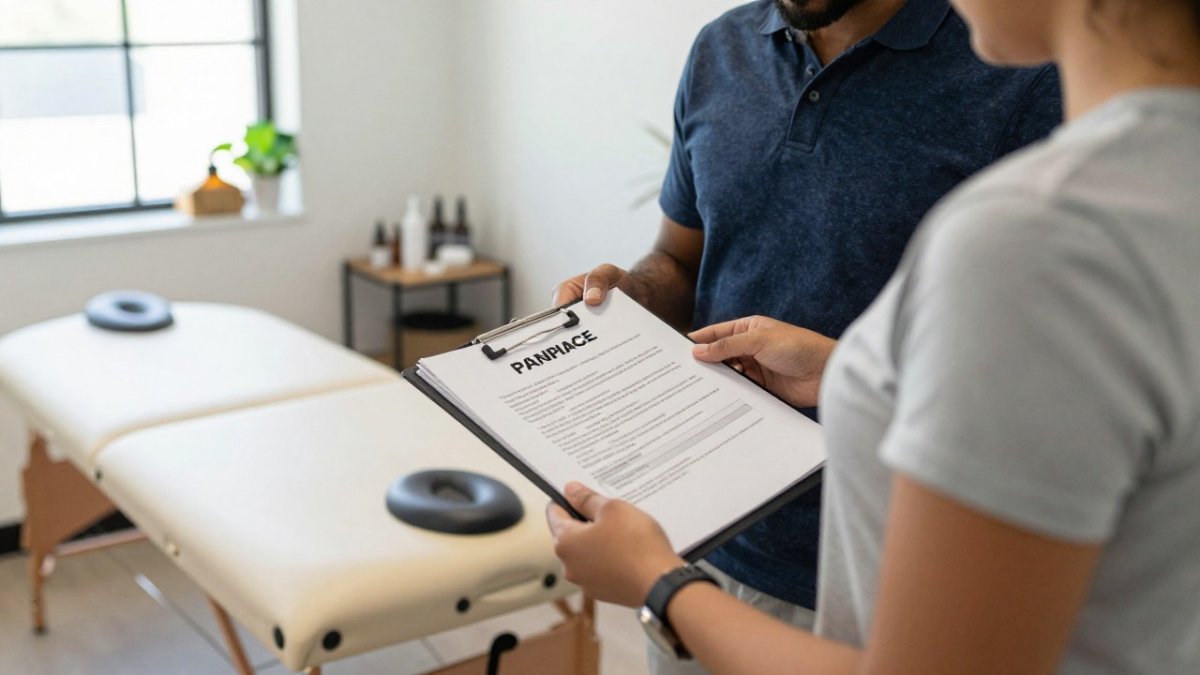
Staffing is the next critical step. Confirm which certifications your therapists must hold, how the franchisor trains new staff, and whether its onboarding program covers your local licensing obligations. Track renewal dates for every certification so that a lapsed credential does not interrupt service.
Technology is often underestimated. Most wellness franchises rely on a booking platform, a membership billing system, a point-of-sale tool and a client records system. Ask which platforms the franchisor requires, what each costs, and whether the data they collect integrates with your other systems.
Watch out: membership billing and client records are sensitive, so verify how the system handles payment data and any health information before you go live.
Once the location is open, a step-by-step launch checklist keeps the first 90 days on track:
- Confirm all state and local licenses and certifications are current
- Verify each therapist's credentials and set renewal reminders
- Configure the booking, billing and point-of-sale systems and test them end to end
- Load the membership pricing and cancellation terms exactly as the franchisor specifies
- Set a target retention rate and review it monthly
Planning Your Exit and Booking Your Discovery Call with Shane Evans
An exit plan is worth thinking through before you invest, not after. Franchise agreements typically include transfer, renewal and termination provisions that determine how and when you can sell or close the location, and some impose restrictions on a sale to a third party.
If you are weighing a wellness franchise and want to see how these pieces fit your own situation, you can book a discovery call with Shane Evans to walk through your niche, your liquid capital and the questions raised in this guide. A discovery call is a practical way to test your assumptions before committing to a franchise agreement.
Best for: entrepreneurs with substantial liquid capital who want a membership-based wellness concept and are prepared to review the FDD with counsel.
Skip if: you are looking for a low-cost startup, or you have not yet decided which wellness services you want to deliver.
Frequently Asked Questions Summary
| Question | Key Point |
|---|---|
| Liquid capital needed | Set by Item 7 of the FDD |
| Experience required | Depends on franchisor training |
| First document to review | The franchise disclosure document |
Ready to explore whether this model fits your goals? Schedule your discovery call with Shane Evans.
Frequently Asked Questions
How much does it cost to start a wellness business?
Startup costs depend on location, facility size, equipment, build-out and the franchise fee, so there is no single number to quote. Franchise costs are disclosed in Item 7 of the Franchise Disclosure Document, which lists estimated initial investment ranges. Read that table carefully, then ask Shane Evans for current pricing and a quote tailored to your market. Plan for working capital beyond the build-out, since memberships take months to build.
Do I need a medical background to open a wellness franchise?
Not always. Many wellness franchises are owner-operated business models where the owner manages operations, staffing and marketing, while licensed practitioners deliver regulated services. Requirements vary by state and by service, such as massage therapy licensing. Confirm which certifications your staff must hold and how they must be supervised. Training and onboarding support from the franchisor should cover those responsibilities.
What is the difference between an independent wellness business and a franchise?
An independent business builds its own brand, systems and pricing from scratch. A franchise gives you a proven operating system, brand recognition, training and ongoing support in exchange for an initial franchise fee and continuing royalties. Franchising trades some independence for a lower-risk path with established processes. Review the franchise agreement to see exactly which support and territory rights you receive.
What legal requirements must a wellness franchise meet in the U.S.?
Wellness franchises in the United States must comply with federal franchise rules, including the FTC Franchise Rule, which requires delivery of an FDD before any binding agreement or payment. Individual states may add registration or filing requirements, and each service type carries its own licensing rules, such as state massage or esthetics boards. Local zoning, business licensing and health codes also apply to your facility. Consult a franchise attorney before signing.